As the heart of the home, your kitchen needs a floor that's both stylish and tough. Vinyl kitchen flooring has become the leading solution, moving far beyond basic options. Today's Luxury Vinyl Plank (LVP) and SPC flooring provide a powerful combination of robust durability, complete water resistance, and endless style choices, perfect for any modern kitchen. This guide covers the essential vinyl kitchen flooring ideas and expert tips you need for your project.
Key takeaways
- Best overall choice: For most kitchens, SPC (Stone Plastic Composite) rigid core vinyl is the top recommendation due to its superior durability, dent resistance, and 100% waterproof construction.
- Performance metrics: Look for a wear layer of at least 20 mil for high-traffic areas and an overall plank thickness of 5 mm or more for better comfort and subfloor forgiveness.
- Top 2026 styles: Leading trends include realistic wide-plank wood looks with EIR technology, industrial concrete-look LVT, luxurious marble-look SPC, and classic herringbone or chevron patterns.
- Installation rule: Floating vinyl plank flooring should be installed after kitchen cabinets, not underneath them, to allow for natural expansion and contraction.
- Budgeting: The average installed cost for luxury vinyl plank flooring typically ranges from $4.50 to $16 per square foot, depending on product quality and project complexity.
Best Types Of Vinyl Flooring For Kitchen
Navigating the world of vinyl flooring can be confusing with terms like LVP, LVT, and SPC. The simplest way to understand your options is to separate them by their core construction, as this is what truly defines their performance in a demanding environment like the kitchen.
Core Construction: The Heart Of Performance
- Flexible core (Traditional LVT/LVP): This is the original luxury vinyl, made from flexible PVC. While it feels soft underfoot, it is more prone to dents from heavy appliances and can be less stable with temperature changes.
- WPC (Wood Plastic Composite): A significant upgrade, WPC cores include wood pulp and a foaming agent, making the planks thicker and more comfortable to stand on. It is fully waterproof and a great choice for kitchens where comfort is a priority.
- SPC (Stone Plastic Composite): Widely considered the pinnacle of vinyl technology for kitchens, SPC features a dense core made from natural limestone powder and stabilizers. This makes it incredibly durable, dimensionally stable, and resistant to dents from dropped pots or heavy furniture. Its 100% waterproof core offers the ultimate protection. At Floordi, we recommend high-quality SPC flooring, such as our Avolis line, which provides the perfect blend of style and strength needed for the modern kitchen.
The Unbeatable Advantage: Waterproof Performance
One of the main reasons vinyl is the best flooring for kitchens is its superior water resistance. Unlike other flooring types, vinyl is built to handle spills and moisture.
- Vinyl Flooring: Products like LVP and SPC have a synthetic polymer core, making them 100% waterproof. This means water will not damage the planks or tiles, making them perfect for kitchens, bathrooms, and basements.
- Laminate Flooring: While some modern laminate products are highly water-resistant, their core is still made of wood fiber. This makes them susceptible to swelling and permanent damage if water penetrates the seams. For a truly worry-free kitchen floor, vinyl is the safer choice.
Table: Vinyl Flooring Kitchen Comparison
|
Flooring Type |
Core Construction |
Durability / Dent Resistance |
Waterproofing |
Comfort Underfoot |
Average Material Cost/Sq. Ft. |
|
Sheet Vinyl |
Felt or Fiberglass Backing |
Low to Moderate |
Excellent (Seamless) |
Good (Often Cushioned) |
$1 - $2 |
|
WPC Rigid Core |
Wood Plastic Composite |
High |
Excellent (Waterproof Core) |
Excellent (Softer feel) |
$3 - $7 |
|
SPC Rigid Core |
Stone Plastic Composite |
Excellent (Extremely dent-resistant) |
Excellent (100% Waterproof Core) |
Fair to Good (Harder feel) |
$3 - $7 |
Vinyl Kitchen Flooring Style Ideas For 2026
Thanks to advanced manufacturing, vinyl can realistically mimic high-end materials, allowing you to achieve any design aesthetic without compromising on performance. Here are the top trends to inspire your project.
1. Wide-Plank Wood-Look Vinyl
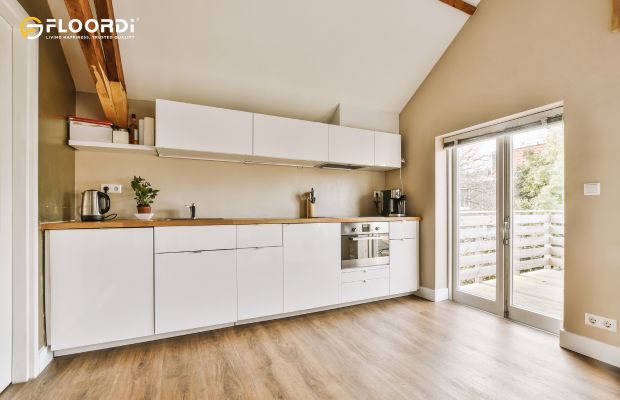
The trend of wide planks (7 inches or wider) continues to dominate kitchen design. Wide planks create fewer seams, making the kitchen feel more open, spacious, and luxurious. The larger surface area beautifully showcases the detailed wood grain and texture.
For the most authentic look, choose a product with Embossed-in-Register (EIR) technology. This process aligns the surface texture with the printed wood grain image, creating a three-dimensional effect that is remarkably similar to real hardwood. This is one of the most popular kitchen and flooring ideas for a timeless appeal.
2. Concrete-Look Vinyl For Modern Kitchens
For a minimalist, modern, or industrial aesthetic, concrete-look vinyl is a leading trend. It delivers the sophisticated visual of polished concrete without the drawbacks. Real concrete is hard, cold, and porous, making it prone to stains and cracks.
Concrete-look LVT, on the other hand, is warmer, more comfortable, 100% waterproof and much easier to install. It provides a perfect neutral backdrop that pairs beautifully with wood cabinets, stainless steel appliances, and bold accent colors.

3. Marble-Look LVT Or SPC
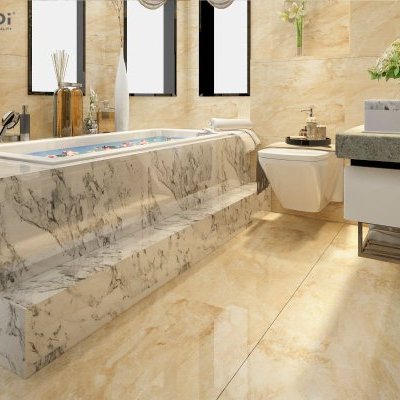
Achieve the opulent look of a luxurious stone like Carrara or Calacatta marble with the practicality of vinyl. Real marble is expensive, porous, and easily scratched, making it a challenging choice for a kitchen. Marble-look vinyl flooring, especially in an SPC format, captures the same high-end aesthetic without the maintenance headaches.
For the most authentic appearance, opt for large-format tiles (e.g., 12" x 24"). This minimizes grout lines and creates a grand, seamless look that mimics real stone slabs.

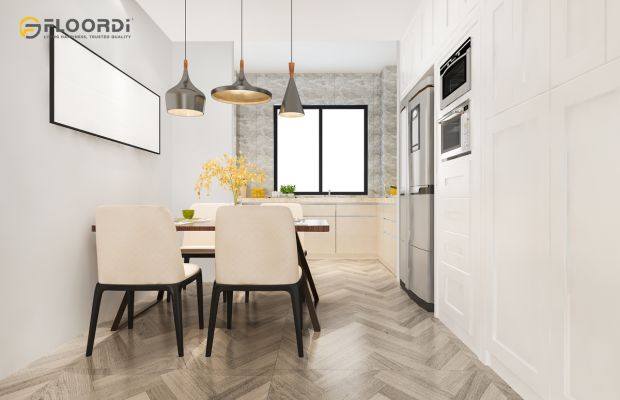
4. Chevron & Herringbone Patterns
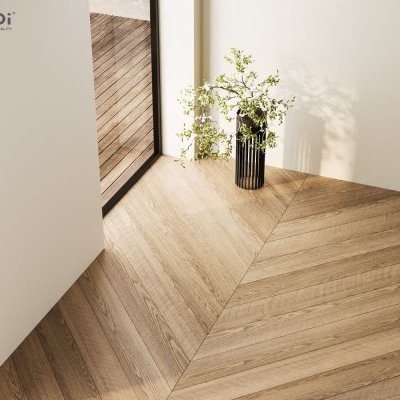
These classic parquet patterns are making a major comeback, turning the kitchen floor into a stunning focal point. While often confused, they are distinct:
- Herringbone uses rectangular planks arranged in a staggered, interlocking zigzag.
- Chevron uses planks with angled ends to form a continuous "V" shape.
Both patterns add a sense of movement, texture, and timeless sophistication. For the most authentic result, use individual planks to create the pattern. While more labor-intensive, this method provides genuine depth that cannot be replicated by printed sheet vinyl.
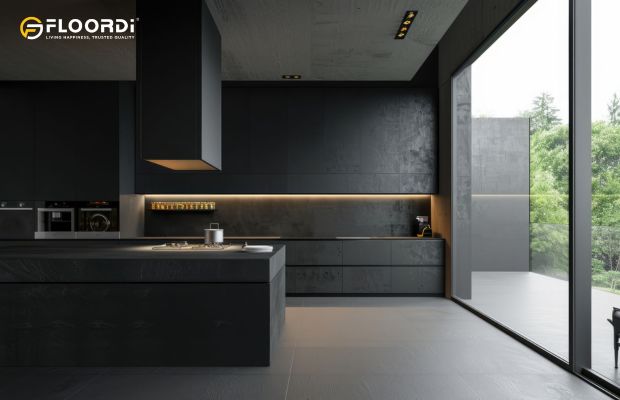
5. Matte Black Or Dark Charcoal Vinyl
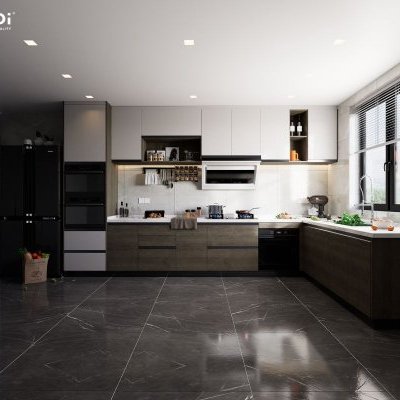
A bold, dramatic floor can act as a powerful anchor in your kitchen's design. A matte black or dark charcoal floor creates a striking contrast with light-colored cabinets or can be paired with dark cabinets for a seamless, contemporary look.
A matte finish is highly recommended over a high gloss. It is more on-trend, reduces glare, and is more effective at hiding minor dust and footprints, making it a practical choice for a busy kitchen.
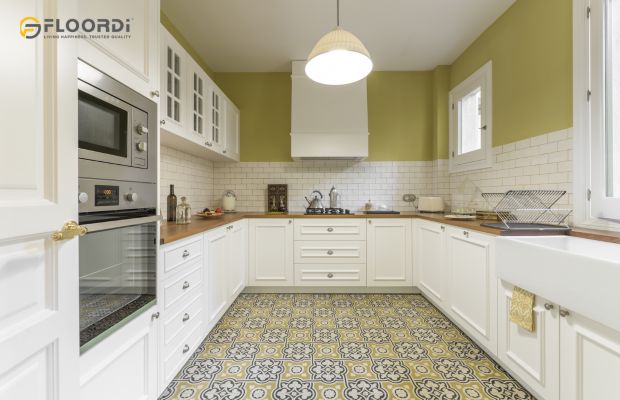
6. Patterned Sheet Vinyl Or Retro-Inspired LVT
For those looking to inject personality and color, patterned vinyl offers endless possibilities. Retro-inspired LVT, often featuring mid-century modern geometric patterns or classic checkerboards, is a fun way to add character. Modern sheet vinyl has also been revitalized with designs ranging from intricate floral motifs to realistic terrazzo looks. This is a great way to explore unique kitchen vinyl flooring ideas on a tighter budget.
FAQs About Vinyl Kitchen Flooring
- Which vinyl flooring is best for a kitchen?
For the optimal balance of durability, water resistance, and style, SPC (Stone Plastic Composite) rigid core vinyl with a wear layer of at least 20 mil is the best choice for a high-traffic kitchen. It offers superior dent resistance and is 100% waterproof, providing maximum peace of mind.
- Do kitchen cabinets go on top of vinyl plank flooring?
No, you should not install permanent kitchen cabinets on top of a floating vinyl plank floor. According to experts like Tom Silva of This Old House, floating floors must be free to expand and contract with temperature changes. The correct method is to install the cabinets first, then install the flooring around them, leaving a small expansion gap covered by trim.
- How thick should kitchen vinyl flooring be?
There are two thickness measurements to consider:
- Overall Plank Thickness: A minimum of 5 mm is recommended for good comfort, sound absorption, and stability.
- Wear Layer: This is the protective top coating. For busy kitchens, a wear layer of at least 20 mil (0.020 inches) is ideal for long-term scratch and stain resistance.
- How much does it cost to install vinyl plank flooring in a kitchen?
The total cost can vary widely. According to 2025 data from HomeAdvisor, homeowners can expect to pay between $4.50 and $16 per square foot, installed, for luxury vinyl plank (LVP/SPC). For a 200-square-foot kitchen, this translates to a typical range of $900 to $3,200. Always get a detailed quote that includes materials, labor, and any necessary subfloor preparation.
Ready To Transform Your Kitchen?
Choosing the right vinyl flooring can completely elevate your kitchen's style while providing a durable, worry-free foundation for years to come. With so many high-quality options available, from the realistic wood looks of Avolis Luxury Vinyl Flooring to modern concrete designs, you are sure to find the perfect match for your home.
If you are ready to explore these vinyl kitchen flooring ideas further, Contact Floordi's design experts today for a free consultation.