Choosing the right dark hardwood flooring can feel overwhelming. This guide simplifies your decision by covering the essentials: we'll compare top wood species, explore styling for any interior theme, and give you a clear look at the pros and cons to help you select the perfect floor with confidence.
Key takeaways
- Aesthetic vs. practicality: Dark floors are stunningly elegant but require more frequent cleaning as they easily show dust and light-colored pet hair. Scratches can also be more noticeable.
- Top wood species: The best choices include naturally dark Walnut for luxury, versatile and stain-friendly Oak, ultra-durable Hickory for high-traffic areas, and sleek Maple for modern designs.
- Styling is key: The success of a dark floor depends on creating contrast. Pair it with lighter walls and furnishings to prevent the room from feeling too small or heavy.
- Construction matters: Solid hardwood offers incredible longevity but is sensitive to moisture. Engineered hardwood provides more stability for basements or concrete subfloors.
- Powerful alternatives: Luxury Vinyl Plank (LVP), like those from top brand Avolis, offers a 100% waterproof and highly durable alternative, perfect for kitchens and bathrooms.
Popular Dark Hardwood Species For Flooring
Choosing the right wood species is the first step in creating your perfect dark floor. You can either select a wood that is naturally dark or stain a lighter wood to achieve the desired shade. Here’s a breakdown of the top contenders.
Walnut
American Walnut is the premier choice for a naturally dark wood floor. It’s prized for its rich, chocolate-brown tones, sometimes with hints of purple, and a fine, elegant grain that exudes luxury.
- Characteristics: Offers an authentic, sophisticated look that is consistent throughout the wood. This means scratches won't reveal a lighter color underneath.
- Durability (Janka Hardness): Walnut is a softer hardwood, with a Janka rating of around 1010 psi. This makes it more susceptible to dents and scratches, so it’s best suited for lower-traffic areas like bedrooms or formal living rooms.
- Material cost: As a premium species, expect a higher price point. Unfinished solid Walnut planks typically range from $4.90 to $6.90 per square foot from wholesale suppliers.

Oak
Oak (both Red and White) is the most popular hardwood in North America for a reason. It's the perfect canvas for a dark stain.
- Characteristics: Oak features a prominent, open grain pattern that absorbs dark stains beautifully, resulting in a deep, consistent color. This strong grain also helps to camouflage minor scratches and wear.
- Durability (Janka Hardness): Oak offers a great balance of durability and stability, with a Janka rating of 1290 psi for Red Oak and 1360 for White Oak. It’s a reliable workhorse for most residential applications.
- Material cost: Oak is widely available and budget-friendly. Prefinished solid oak can range from $3.39 to over $7.00 per square foot, making it an accessible option for many projects.

Hickory
If durability is your number one priority, look no further than Hickory. It is the hardest domestic wood commonly used for flooring.
- Characteristics: Hickory is known for its dramatic grain patterns and significant color variation between planks, giving it a bold, rustic character. When stained dark, these variations create a rich, textured look.
- Durability (Janka Hardness): With an exceptional Janka rating of 1820, Hickory is highly resistant to dents, scratches, and everyday wear. It’s the ideal choice for high-traffic areas, kitchens, and homes with kids and pets.
- Material cost: Hickory is a mid-to-high-range option, with material costs typically between $4.00 and $9.00 per square foot.

Maple
For a clean, modern aesthetic, Hard Maple is an excellent choice. However, it comes with a unique challenge.
- Characteristics: Maple has a very fine, subtle grain, creating a smooth and uniform surface that’s perfect for minimalist and contemporary interiors.
- Durability (Janka Hardness): With a Janka rating of 1450, Maple is incredibly dense and durable even harder than Oak.
- Staining challenges: Maple’s dense structure makes it difficult to stain evenly. A poor application can result in a blotchy finish. For a dark maple floor, it is highly recommended to choose a high-quality, factory-finished product to ensure a beautiful, consistent color.
- Material cost: Maple is priced similarly to Oak, generally ranging from $4.79 to over $10.00 per square foot for prefinished solid planks.

Quick Comparison Of Dark Wood Species
|
Wood Species |
Janka Hardness (psi) |
Typical material cost (per sq. ft.) |
Key aesthetic traits |
Best for dark finish |
|
American Walnut |
1010 |
$4.90 - $6.90+ |
Naturally deep brown, fine/elegant grain |
Natural |
|
Red/White Oak |
1290 - 1360 |
$3.39 - $7.00+ |
Prominent grain, highly versatile, classic |
Stained |
|
Hickory |
1820 |
$4.00 - $9.00+ |
Highest durability, strong grain, rustic |
Stained |
|
Hard Maple |
1450 |
$4.79 - $10.00+ |
Very durable, fine/subtle grain, modern |
Stained (Prefinished) |
Source: Data compiled from flooring industry analysis and major retail suppliers.
Best Dark Wood Flooring Styles By Interior Theme
A dark floor is a powerful design tool, but its success depends on how it interacts with the rest of your space. It acts as a "design anchor," allowing other elements to shine.
The Modern Aesthetic: Sleek Contrast
In modern design, which values clean lines and uncluttered spaces, dark floors provide a dramatic and sophisticated contrast.
- How it works: The dark, uniform surface makes minimalist furniture and architectural details pop. It adds a touch of organic richness that prevents the space from feeling cold or sterile.
- Key pairings: Pair with crisp white or light grey walls to reflect light. Choose furniture with sleek lines and light-colored upholstery. Metallic accents like brass or matte black stand out beautifully.
- Pro tip: Opt for wide planks and a matte or satin finish. This creates a cleaner visual field and a more understated, natural look that aligns with modern minimalism.

The Classic & Traditional Space: Timeless Elegance
Dark wood flooring is a cornerstone of classic design, evoking a sense of history, luxury, and permanence.
- How it works: It provides the expected, high-quality foundation for a style built on symmetry and order.
- Key pairings: This style often features ornate, dark wood furniture (like mahogany or ebony) and rich textiles like velvet and silk. Neutral wall colors allow the rich floors and detailed furniture to be the stars of the show.
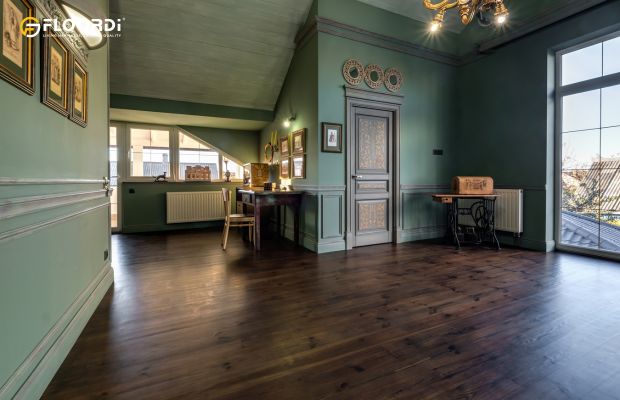
The Rustic Retreat: Natural and Authentic
Rustic design celebrates the unrefined beauty of nature. Dark wood floors are essential for creating the warm, cozy, and authentic atmosphere this style is known for.
- How it works: The goal isn't perfection but character. Darker tones contribute to the warm, earthy, and grounded feeling of a rustic space.
- Key pairings: Combine with other natural materials like exposed wood beams, a large stone fireplace, and leather or wool textiles.
- Pro tip: Choose floors with texture and character. Distressed, hand-scraped, or reclaimed wood with visible knots and mineral streaks is ideal. Species like Hickory or character-grade Oak are perfect fits.

Dark Hardwood Look Alternatives
If you love the look of dark wood but need a solution for a moisture-prone area like a bathroom or basement, or if you're working with a tighter budget, there are fantastic alternatives to consider.
Laminate Flooring
Laminate flooring is a synthetic product that uses a high-resolution photographic layer to mimic the look of real wood.
- Pros: It's highly affordable, with material costs often between $1 to $5 per square foot. The protective wear layer makes it very durable and resistant to scratches and stains.
- Cons: Laminate cannot be refinished. Most importantly, its wood-fiber core makes it susceptible to water damage, so it's not recommended for wet areas. While some options are "water-resistant," they are not fully waterproof.

Luxury Vinyl Plank (LVP)
Luxury vinyl has become a go-to choice for its incredible performance and realistic wood looks.
- Pros: The standout feature of LVP is that it's 100% waterproof due to its synthetic polymer core. This makes it the perfect choice for any room in the house, including bathrooms, kitchens, and basements. It's also durable, comfortable underfoot, and easy to maintain. Top brands like Avolis offer stunningly realistic designs that capture the beauty of dark hardwood.
- Cons: Like laminate, LVP cannot be refinished. While the designs are excellent, they don't have the same unique, natural feel as real wood.

Pros & Cons Of Choosing Dark Wood Floors
Before you make your final decision, it’s essential to weigh the advantages and disadvantages of living with dark hardwood floors.
The Advantages: Why You'll Love Them
- Timeless elegance: Dark floors create an immediate sense of luxury and sophistication. They make a bold design statement that never goes out of style.
- Creates coziness: The deep, rich tones make even large, open-concept spaces feel warmer, more inviting, and cozier.
- Highlights your decor: Dark floors provide a stunning contrast that makes light-colored furniture, rugs, and wall paint pop, adding depth and visual interest to your room.
- Hides certain flaws: While they show dust, dark floors are excellent at hiding dark-colored stains (like coffee or wine spills) and can mask imperfections in an older subfloor.
The Disadvantages: The Practical Reality
- Shows everything light: This is the biggest drawback. Dust, lint, footprints, and light-colored pet hair stand out in high contrast against a dark surface. Be prepared for a more frequent cleaning routine.
- Scratches can be obvious: When a dark floor gets scratched, the lighter natural wood underneath is exposed, making the scratch more visible. This is a key consideration for homes with active kids or large dogs.
- Can make rooms feel smaller: Because dark colors absorb light, these floors can make a small or poorly lit room feel even smaller and more enclosed. This can be managed with light wall colors and good lighting.
- Finish matters: A high-gloss finish will highlight every speck of dust and every scratch. A satin or matte finish is highly recommended, as it minimizes reflections and is far more forgiving.
Your Perfect Floor Awaits
Choosing dark hardwood flooring is a balance of aesthetic desire and practical living. By considering your lifestyle, your home's unique characteristics, and your design vision, you can select a floor that is not only beautiful but also a joy to live with for years to come. Whether you opt for the authentic luxury of solid Walnut, the all-around performance of Oak, or the waterproof durability of Avolis LVP, the right dark floor will transform your space.